Table of Contents
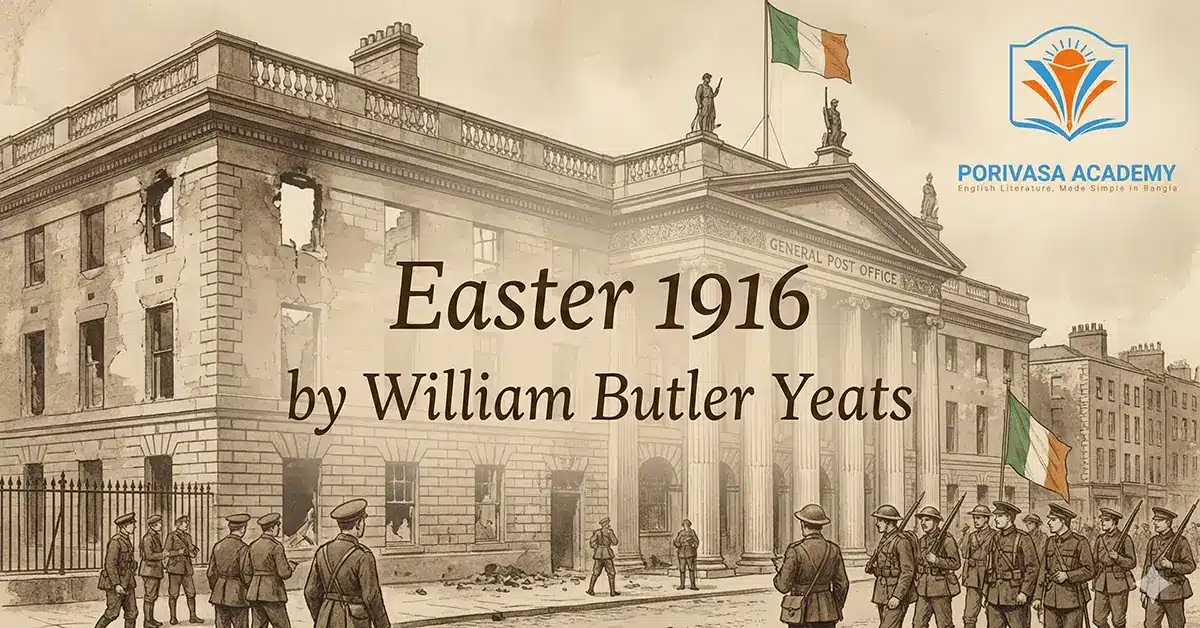
Easter 1916 by William Butler Yeats
A Historical Elegy of Sacrifice and Transformation
Introduction “Easter 1916” is one of William Butler Yeats’s most significant political poems. It was written between May and September 1916, shortly after the Easter Rising—an armed insurrection in Ireland during Easter Week, April 1916. The rising was mounted by Irish republicans to end British rule in Ireland and establish an independent Irish Republic while the United Kingdom was heavily engaged in World War I.
The poem is not just a celebration of the martyrs; it is a complex expression of shock, admiration, and ambivalence. Yeats struggles with the transformation of ordinary, imperfect men into legendary heroes. The poem’s central oxymoron, “A terrible beauty is born,” captures the duality of the event: the “terror” of violence and death, and the “beauty” of their martyrdom and the dream of independence.
ভূমিকা “Easter 1916” (ইস্টার ১৯১৬) উইলিয়াম বাটলার ইয়েটসের লেখা একটি কালজয়ী রাজনৈতিক কবিতা। এটি ১৯১৬ সালের এপ্রিল মাসে আয়ারল্যান্ডে ব্রিটিশ শাসনের বিরুদ্ধে সংঘটিত “ইস্টার রাইজিং” (Easter Rising)-এর প্রেক্ষাপটে লেখা। প্রথম বিশ্বযুদ্ধের সময় যখন ব্রিটেন ব্যস্ত ছিল, তখন আইরিশ বিপ্লবীরা স্বাধীনতার দাবিতে এই সশস্ত্র বিদ্রোহ করে।
এটি কেবল বিপ্লবীদের গুণগান নয়, বরং এটি কবির মনের গভীর দ্বন্দ্ব, বিস্ময় এবং শ্রদ্ধার মিশ্রণ। ইয়েটস দেখিয়েছেন কীভাবে সাধারণ দোষে-গুণে ভরা মানুষগুলো দেশের জন্য প্রাণ দিয়ে ইতিহাসের পাতায় নায়ক হয়ে উঠলেন। কবিতার মূল সুর বা রিফ্রেইন—“A terrible beauty is born” (এক ভয়ংকর সৌন্দর্যের জন্ম হলো)—বিদ্রোহের এই দ্বৈত রূপকে প্রকাশ করে। এখানে “ভয়ংকর” (Terrible) শব্দটি মৃত্যু ও সহিংসতার প্রতীক, আর “সৌন্দর্য” (Beauty) শব্দটি তাদের আত্মত্যাগ ও স্বাধীনতার স্বপ্নের প্রতীক।
| Category | Detail |
| Poet | William Butler Yeats |
| Written | May – September 1916 |
| Published | 1921 (in Michael Robartes and the Dancer) |
| Historical Event | The Easter Rising (April 24, 1916) |
| Key Symbolism | The Stone (Unchanging purpose), The Stream (Life’s changes) |
| Form | 4 Stanzas (Loosely Iambic Trimeter/Tetrameter) |
Background: Before the Rising, Yeats believed that romantic Ireland was dead and that the country was driven only by greed. He advocated for art and culture rather than violence. The execution of the rebel leaders by the British firing squad shocked him deeply, forcing him to re-evaluate his view of these men and the nature of heroism.
Detailed Analysis by Stanza (English & Bangla)
Stanza 1: The Casual Comedy (নৈমিত্তিক প্রহসন)
English Analysis: Yeats begins by describing the banality of pre-revolution Dublin. He meets the future revolutionaries at the “close of day” coming from their mundane jobs at counters and desks. The atmosphere is grey and dull (“Eighteenth-century houses”). His interactions with them were trivial—mocking tales, meaningless polite words, and jokes shared at his exclusive club. He believed he and these people lived in the land of “Motley” (the multi-colored costume of a court jester or clown). He viewed them as insignificant characters in a comedy, never imagining they were capable of tragedy or heroism.
- Key realization: The transition from the “comedy” of daily life to the serious “tragedy” of the uprising.
Bangla Analysis: কবিতার শুরুতে ইয়েটস বিদ্রোহের আগের ডাবলিন শহরের একঘেয়ে জীবনের চিত্র তুলে ধরেন। তিনি বর্ণনা করেন যে, দিনের শেষে অফিস বা দোকানের কাজ শেষ করে এই বিপ্লবীরা যখন বাড়ি ফিরতেন, তখন কবির সাথে তাদের দেখা হতো। তাদের পেছনের প্রেক্ষাপট ছিল “অষ্টাদশ শতাব্দীর ধূসর বাড়িঘর” (grey Eighteenth-century houses)। কবি স্বীকার করেন যে তাদের সাথে তার সম্পর্ক ছিল খুবই সাধারণ এবং লৌকিক। তিনি তাদের সাথে কেবল ভদ্রতার খাতিরে অর্থহীন কিছু কথা বলতেন। এমনকি ক্লাবে বসে বন্ধুদের সাথে তিনি এই সব মানুষদের নিয়ে বিদ্রূপ বা হাস্যরস (mocking tale) করতেন। ইয়েটসের ধারণা ছিল, তারা সবাই একটি “Motley” (ভাঁড়ের পোশাক) পরিহিত সমাজে বাস করছেন—অর্থাৎ তাদের জীবন একটি প্রহসনের মতো, যেখানে বীরত্বের কোনো স্থান নেই। তিনি ঘুণাক্ষরেও ভাবেননি যে এই সাধারণ মানুষগুলোই একদিন ইতিহাস বদলে দেবে।
Stanza 2: The Transformation of Individuals (ব্যক্তিসত্তার রূপান্তর)
English Analysis: Yeats dedicates this stanza to four specific individuals involved in the Rising, describing their past flaws and their transformation:
- Constance Markievicz: Described as a woman who spent her days in “ignorant good-will.” Yeats critiques her obsession with politics, saying her nights spent in argument made her voice “shrill,” destroying the sweet voice she had when she was a young, aristocratic beauty riding to hounds.
- Patrick Pearse: The man who “kept a school” (St. Enda’s). He is described as a winged horse (Pegasus), symbolizing his poetic and intellectual spirit.
- Thomas MacDonagh: Pearse’s helper and friend. Yeats notes his “sensitive nature” and “daring and sweet thought,” suggesting he had great potential as a writer that was cut short.
- John MacBride: Describes him as a “drunken, vainglorious lout.” MacBride was the estranged husband of Maud Gonne (Yeats’s great love), and Yeats despised him for mistreating her. However, Yeats admits that even this man has resigned his part in the “casual comedy” and has been transformed by his sacrifice.
Bangla Analysis: এই স্তবকে ইয়েটস চারজন নির্দিষ্ট বিদ্রোহীর বর্ণনা দিয়েছেন এবং তাদের রূপান্তর নিয়ে আলোচনা করেছেন: ১. কনস্ট্যান্স মার্কিয়েভিচ (Constance Markievicz): ইয়েটস তাকে এমন এক নারী হিসেবে বর্ণনা করেছেন যার দিন কাটত “অজ্ঞাত সদিচ্ছায়”। অতিরিক্ত রাজনৈতিক তর্কের কারণে তার কণ্ঠস্বর কর্কশ (shrill) হয়ে গিয়েছিল, অথচ যৌবনে তিনি ছিলেন অত্যন্ত সুন্দরী ও মৃদুভাষী। ২. প্যাডরেইক পিয়ার্স (Patrick Pearse): তিনি ছিলেন একজন স্কুল শিক্ষক (সেন্ট এন্ডাস স্কুল) এবং কবি। ইয়েটস তাকে “ডানা মেলা ঘোড়া” বা পেগাসাসের সাথে তুলনা করেছেন, যা তার কাব্যিক প্রতিভার প্রতীক। ৩. থমাস ম্যাকডোনাফ (Thomas MacDonagh): পিয়ার্সের বন্ধু ও সহযোদ্ধা। ইয়েটস তাকে একজন সংবেদনশীল এবং প্রতিশ্রুতিশীল লেখক হিসেবে উল্লেখ করেছেন, যার ভবিষ্যৎ উজ্জ্বল হতে পারত। ৪. জন ম্যাকব্রাইড (John MacBride): ইয়েটস তাকে “মাতাল ও দম্ভপূর্ণ নিচ ব্যক্তি” (drunken, vainglorious lout) বলে গালি দিয়েছেন। ম্যাকব্রাইড ছিলেন ইয়েটসের প্রেমিকা মড গনের স্বামী, তাই তার প্রতি কবির ব্যক্তিগত ক্ষোভ ছিল। কিন্তু কবিতার শেষে ইয়েটস স্বীকার করেন যে, দেশের জন্য প্রাণ দিয়ে ম্যাকব্রাইডও সেই “প্রহসন” থেকে নিজেকে মুক্ত করেছেন এবং ইতিহাসের অংশ হয়ে উঠেছেন।
Stanza 3: The Stone and the Stream (পাথর ও নদীর স্রোত)
English Analysis: This stanza introduces the central metaphor of the poem: The Stone. Yeats contrasts the rebels’ single-minded obsession (“Hearts with one purpose alone”) with the ever-changing natural world.
- The Living Stream: Represents life, nature, and change. The clouds move, the shadows change, the horses slide, and the birds dive. Life is fluid and adaptable.
- The Stone: Represents the rebels’ fixed ideology and fanaticism. It sits in the middle of the stream, obstructing the flow. While the stone represents strength and consistency, it also lacks life. Yeats suggests that too much dedication to one cause can make a person rigid and unfeeling, lacking the flexibility of life.
Bangla Analysis: তৃতীয় স্তবকে ইয়েটস কবিতার সবচেয়ে শক্তিশালী রূপক বা মেটাফোর ব্যবহার করেছেন—“পাথর” (The Stone)। তিনি বিপ্লবীদের হৃদয়কে একটি পাথরের সাথে তুলনা করেছেন। পাথর যেমন নদীর স্রোতের মাঝখানে অটল ও স্থবির হয়ে থাকে, বিপ্লবীদের সংকল্পও ঠিক তেমনই অনড়।
- জীবন্ত স্রোত (The Living Stream): এটি জীবন ও প্রকৃতির প্রতীক। এখানে মেঘের ছায়া সরে যায়, ঘোড়া পা হড়কায়, জলপাখিরা ডুব দেয়—অর্থাৎ প্রকৃতি সর্বদা পরিবর্তনশীল।
- পাথর: এটি বিপ্লবীদের “একক উদ্দেশ্য” (one purpose)। এটি জীবনের স্বাভাবিক প্রবাহকে বাধাগ্রস্ত করে। ইয়েটস এখানে একটি দার্শনিক প্রশ্ন তুলেছেন: অতিরিক্ত দেশপ্রেম বা আদর্শবাদ কি মানুষকে পাথরের মতো হৃদয়হীন ও অনুভূতিশূন্য করে তোলে? তারা জীবনের সৌন্দর্য উপভোগ করার বদলে কেবল একটি লক্ষ্যের প্রতি স্থির হয়ে গিয়েছিল।
Stanza 4: The Sacrifice and the Refrain (আত্মত্যাগ ও উপসংহার)
English Analysis: Yeats questions the cost of this sacrifice. “Too long a sacrifice / Can make a stone of the heart.” He asks if their death was truly needed (“Was it needless death after all?”). The British might have granted Home Rule anyway without the violence. However, he concludes that it is not his place to judge their politics, but rather to honor their dream. He performs the role of the bard, naming the fallen heroes: “MacDonagh and MacBride / And Connolly and Pearse.” By naming them, he canonizes them. Regardless of their faults or the political necessity, they have been “changed utterly.” The “terrible beauty” is the paradox that while the event was tragic (terrible), the birth of national consciousness and martyrdom is magnificent (beauty).
Bangla Analysis: শেষ স্তবকে ইয়েটস আত্মত্যাগের মূল্য নিয়ে প্রশ্ন তোলেন। তিনি বলেন, “দীর্ঘদিনের আত্মত্যাগ হৃদয়কে পাথর করে দিতে পারে।” তিনি সন্দেহ প্রকাশ করেন যে এই মৃত্যু হয়তো অপ্রয়োজনীয় ছিল (needless death), কারণ ইংল্যান্ড হয়তো শেষ পর্যন্ত প্রতিশ্রুতি রক্ষা করত। কিন্তু পরক্ষণেই তিনি নিজেকে সংশোধন করেন। তিনি বলেন, তাদের বিচার করা আমাদের কাজ নয়। আমাদের কাজ হলো মায়ের মতো স্নেহ নিয়ে তাদের নাম স্মরণ করা। তিনি একে একে শহীদদের নাম ঘোষণা করেন—ম্যাকডোনাফ, ম্যাকব্রাইড, কনলি এবং পিয়ার্স। সবশেষে তিনি সেই বিখ্যাত পঙক্তিটি পুনরায় উচ্চারণ করেন—”A terrible beauty is born.” যেখানেই আয়ারল্যান্ডের সবুজ রং (Green is worn) দেখা যাবে, সেখানেই এই পরিবর্তন অনুভূত হবে। তাদের মৃত্যু এক নতুন জাতির জন্ম দিয়েছে, যা একই সাথে বেদনাদায়ক ও গৌরবময়।
Structure and Literary Devices (গঠন ও সাহিত্যিক অলঙ্কার)
1. Form and Symbolism of Numbers (গঠন ও সংখ্যার প্রতীক)
- The Date: The poem has 4 stanzas.
- Stanza Lengths: The first and third stanzas have 16 lines. The second and fourth stanzas have 24 lines.
- Significance: This corresponds to the date of the Easter Rising: 24th day of the 4th month (April), 1916. The structure itself is a monument to the date.
- Bangla: কবিতাটির স্তবক সংখ্যা এবং পঙক্তির সংখ্যা ১৯১৬ সালের ২৪শে এপ্রিল তারিখটিকে নির্দেশ করে (২৪টি লাইন, ১৬টি লাইন)।
2. Meter (ছন্দ)
- The poem is written in Iambic Trimeter and Tetrameter, but it is loose and stress-based. This creates a rhythm that feels conversational yet chant-like in the final stanza.
3. Literary Devices (অলঙ্কার)
- Oxymoron (বিরোধালঙ্কার): “Terrible beauty” — Mixing fear (terror) with aesthetic appreciation (beauty).
- Metaphor (রূপক): “Enchanted to a stone” — Comparing the rebels’ fixed minds to an unmoving stone in a stream.
- Refrain (ধ্রুবপদ): “All changed, changed utterly: / A terrible beauty is born.” — Repeated to emphasize the central theme of transformation.
- Allusion (পরোক্ষ উল্লেখ): “Winged horse” — Refers to Pegasus, symbolizing poetry (Pearse).
- Metonymy: “Motley is worn” — Motley (clown’s outfit) represents the triviality of Irish life before the rebellion.
Themes of the Poem (কবিতার মূল বিষয়বস্তু)
1. Heroism vs. Ordinary Life (বীরত্ব বনাম সাধারণ জীবন) The poem explores how ordinary people (teachers, drunks, aristocrats) can be transformed into mythical heroes through a single act of supreme sacrifice. (সাধারণ মানুষ কীভাবে মহান ত্যাগের মাধ্যমে নায়কে পরিণত হয়, তা এই কবিতার মূল উপজীব্য।)
2. The Ambivalence of Political Violence (রাজনৈতিক সহিংসতার দ্বিধা) Yeats supports the cause of Irish freedom but is uneasy about the method (violence). He wonders if “excess of love” (love for one’s country) bewildered them. He calls the beauty “terrible” because it required blood. (ইয়েটস স্বাধীনতার স্বপ্নকে সমর্থন করলেও সহিংসতাকে ভয় পেতেন। তিনি প্রশ্ন তুলেছেন যে, অতিরিক্ত দেশপ্রেম কি মানুষকে অন্ধ করে দেয়?)
3. Change and Transience (পরিবর্তন ও নশ্বরতা) The contrast between the “living stream” (nature, which changes minute by minute) and the “stone” (the rebels’ fixed purpose) highlights the tension between living a flexible life versus dying for a rigid ideal.
Conclusion
“Easter 1916” remains one of the greatest war poems in the English language. It moves beyond simple propaganda to explore the human cost of revolution. Yeats admits that while he may have debated with these men or disliked them in life, their death has elevated them to a status where they are forever part of Ireland’s history—a history that is now undeniably changed, terrible, and beautiful.
Follow us on Facebook